
Womb Amulets
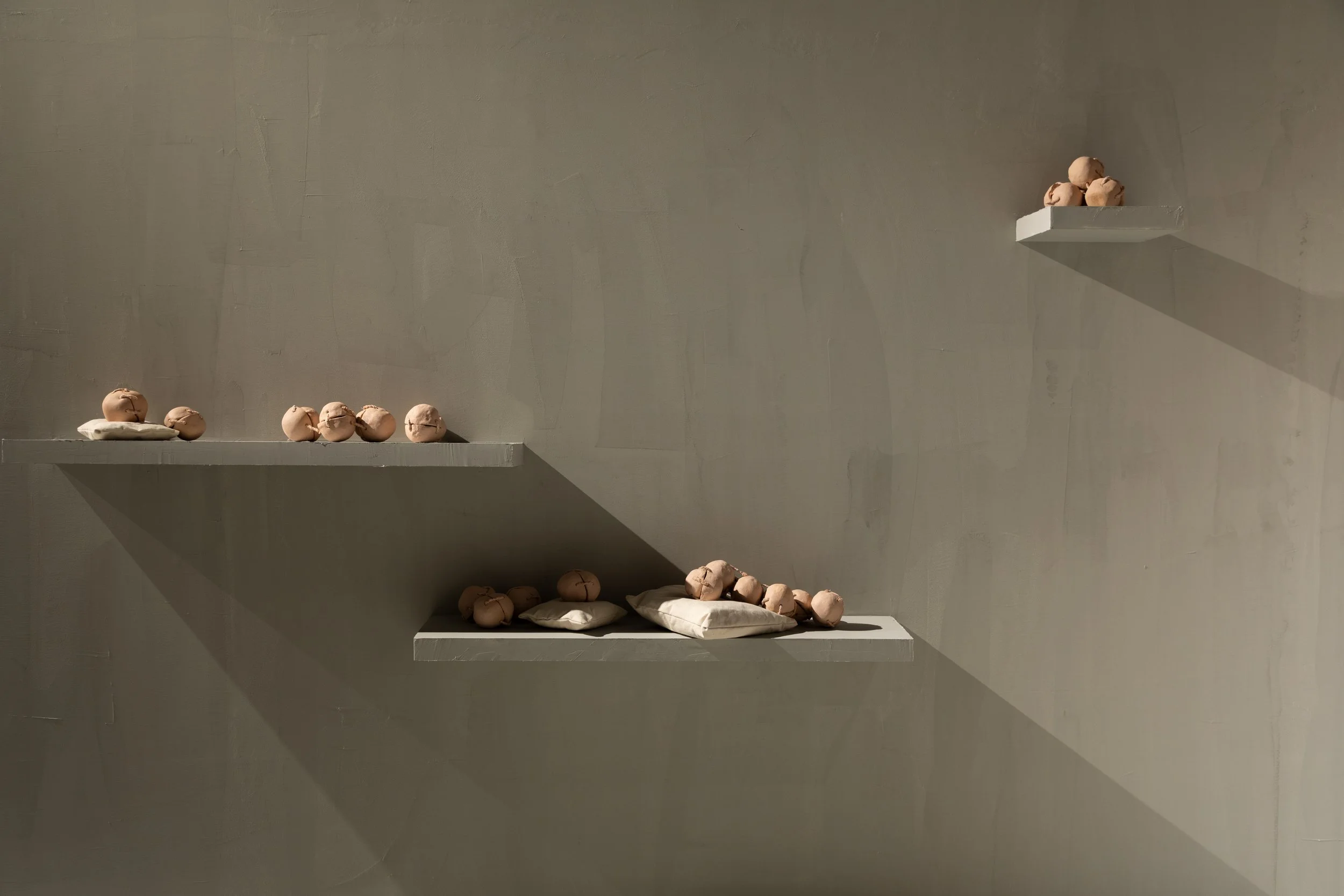
9 x 9 cm; sequence of 29
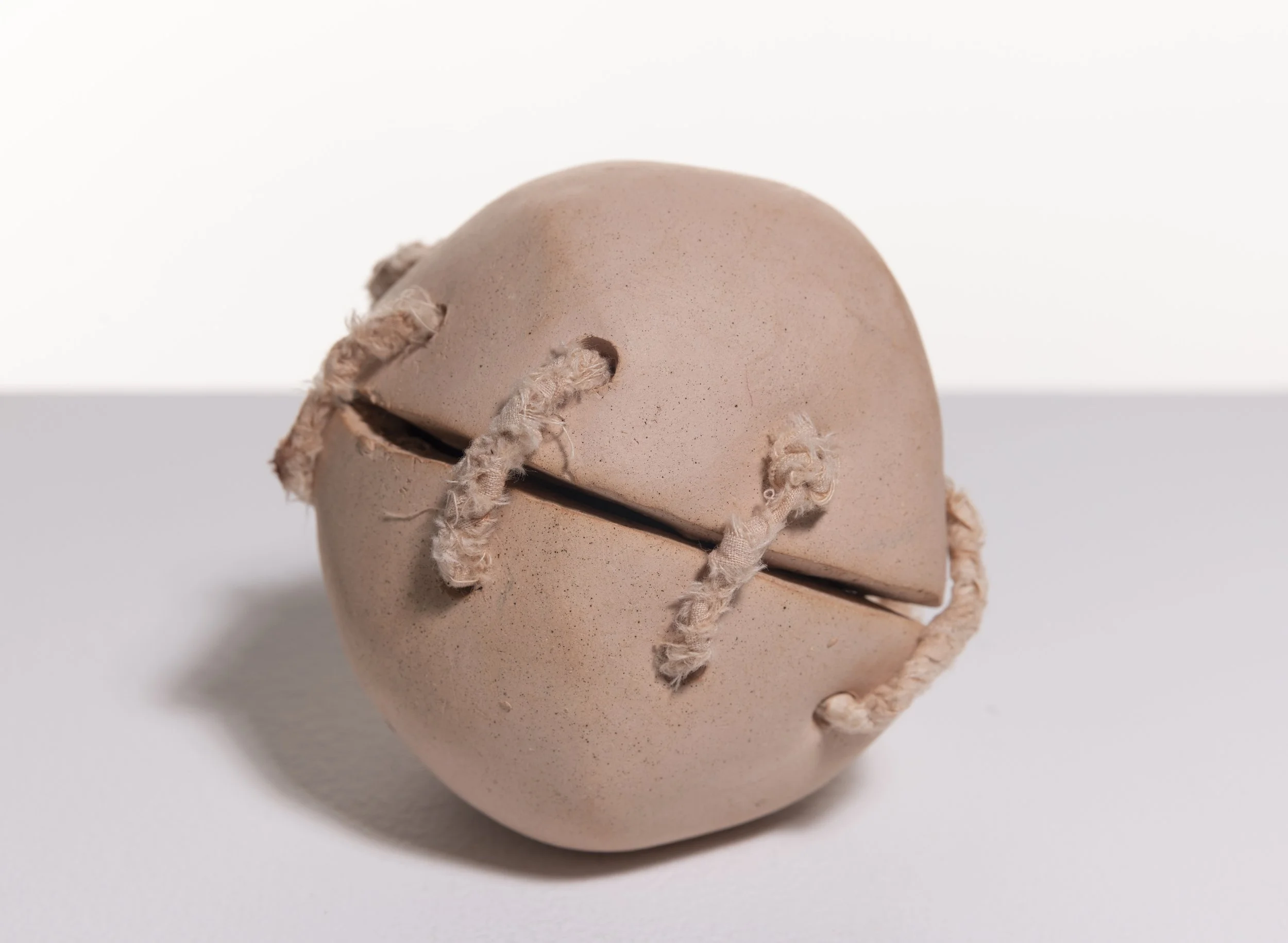
Stoneware, paper, hand-knotted rope from hand-dyed iron oxide cotton
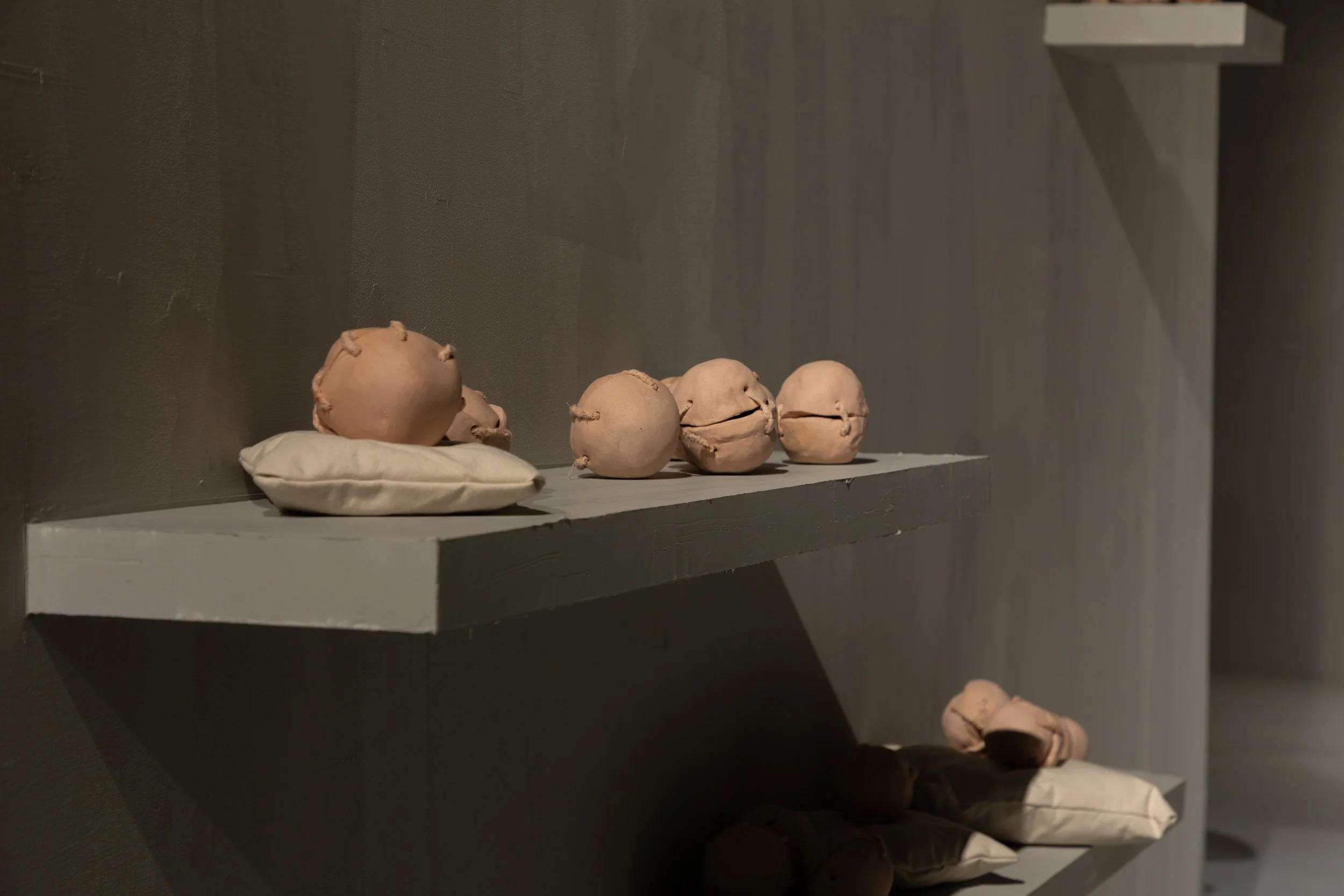
I have made 29 stitched clay amulets for each of the Palestinian women imprisoned in illegal occupier prisons as of January 2023. The amulets are made from pink stoneware and are abstracted wombs. Carved on the insides of the wombs are a series of letters and numbers; they have been inserted with pieces of paper, to mimic ancient spell-binding rituals for protection from Palestine and surrounding regions. Each amulet contains one of the names of the prisoners, who I aim to pray for and protect by not publicly exhibiting their names. I tried many different stitches and threads including embroidery thread, yarn, and bookbinding thread, before settling on binding these works with iron-oxide dyed and hand-knotted thread. In the end, I chose to create something that looked like it was of the flesh, perhaps like intestines.
Palestinian women held in occupier prisons are likely to be subjected to gender-based violence and threats of sexual molestation. They are robbed of basic rights and privacies such as the right to change their menstrual pads or privacy from male prison guards. This means that political prisoners who wear hijab must keep them on at all times of day and often develop alopecia and skin conditions as a result. Although female political prisoners are less often subjected to positional torture as male prisoners are, pregnant political prisoners are cuffed to hospital beds by their hands and feet while giving birth. Newborns stay in prison for 2 years with their mother and stand count when prisoners are rounded up and counted. Many of the children born in occupier prisons develop trauma from male voices. This is a prime example of “the exposure of Palestinians to chronic trauma; that is, trauma that repeatedly occurs," as stated by Lindsey Moore and Ahmed Qabaha. [Moore, L., & Qabaha, A. (2015). Chronic trauma, (post)colonial Chronotopes and Palestinian lives: Omar Robert Hamilton’s though I know the river is dry/ma’a Anni A’rif Anna al-Nahr Qad Jaf. Postcolonial Traumas, 14–29. https://doi.org/10.1057/9781137526434_2.]
Adding complexity to the situation of female political prisoners is their return to Palestinian society after their release, whereby the shame associated with their imprisonment is much higher than it is for their male counterparts. I threaded some of these amulets together as I considered the sisterhood that results from gender-based oppression. The threads are knotted together by a knot that is used for friendship bracelets (forward-backward hitch knot) and are made of muslin, which is a fabric used for making patterns when cutting out the pieces of a sewn garment. The fabric is dyed with iron oxide, which is a pigment extracted from red earth and symbolizes safety; it is a form of protection from the sun’s radiation, as it was the first known sunblock to be used by humans.
Exhibited in SILA: All That is Left to You at Maraya Art Center – September 2025 in Sharjah, UAE
Exhibited in I Can No Longer Produce the Limits of My Own Body at NIKA Project Space – November 2023 in Dubai, UAE
Exhibited in Synthesis NYU Masters Thesis Exhibition at 421 Campus – May 2023 in Abu Dhabi, UAE